
"Central America coffee market"
1000 article(s) found
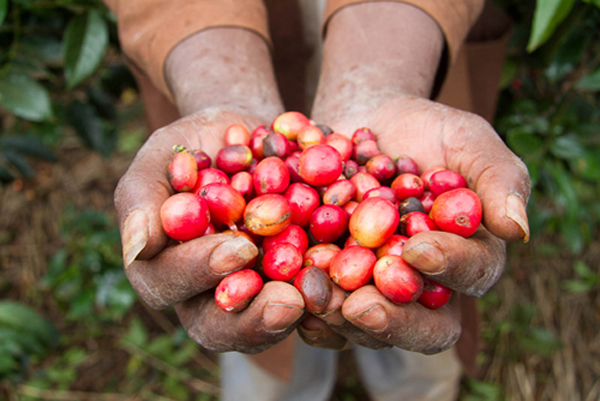
The most detailed introduction to coffee beans in the world. Coffee beginners must see the knowledge points
Coffee comes from coffee beans, which in turn are harvested and processed from the fruits of trees. Coffee trees grow at the equator as the center, between 25 degrees north and south latitude, known as the coffee belt tropical or subtropical countries home, coffee production countries currently have about more than 60 countries, coffee production in South America, Central America, West Indies, Asia, Africa, Arabia, South Pacific and

Global Coffee producing area-El Salvador Coffee Market
ElSalvador is one of the small countries in Central America with a dense population. The flavor of its coffee is characterized by excellent balance. Coffee production in El Salvador: like Guatemala and Costa Rica, coffee in El Salvador is graded according to altitude, and the higher the altitude, the better the coffee. The best brand is Pipil, which is the Aztec Mayan (A

A brief introduction to the planting Market Price of Fine Coffee Bean varieties in Tianqi Manor
Coffee is Nicaragua's main export. According to the president of the Nicaraguan Coffee Farmers' Federation, due to the poor harvest of coffee in Nicaragua's Pacific region, the country's total coffee production in 1998 may be 12% lower than that in 1997. In the coffee year of 1997 and 1998, Nicaragua harvested 1.422 million bags of coffee (each bag of 46kg), which has been producing 1% of coffee in the past 14 years.

Which country has the best coffee?
At present, there are many kinds of coffee beans imported from all over the world, which makes it impossible for people to choose. Here, we will introduce the main origin and characteristics of coffee beans as a reference for choosing coffee. Brazil (South America), the largest producer of coffee, accounts for one-third of global consumption of all grades and varieties of coffee, and has a place in the global coffee market, although Brazil faces many challenges.

A brief introduction to the Market Price of Fine Coffee Bean varieties in Tian Chi Manor with moderate acidity
In many countries, coffee production will be seriously affected for political reasons. Nicaraguan coffee industry is no exception. The 1979 revolution forced coffee planters to flee to Miami. A period of indecision followed, when the government considered whether to redistribute land (including many plantations), which led to a shortage of coffee and a decline in production since the early 1970s

A brief introduction to the planting Market Price of Fine Coffee Bean varieties in Tian Chi Manor
Columbus arrived here in 1502 and reached the east coast of Nicaragua. In 1522, Spanish colonists began to conquer the region. The cities of Granada and Leon were founded in 1524. From then on, Nicaragua became a Spanish colony and came under the jurisdiction of the Governor's Office of Guatemala. The city of Leon developed into a political and cultural center; Granada became a commercial and agricultural center. In the later period of colonial rule

Introduction of Nicaraguan boutique coffee in central Central America Nicaraguan coffee flavor in Matagalpa
Nicaragua is now one of the poorest countries in Central America. Due to its poor economic foundation, the coffee industry is still relatively backward, while coffee farmers are in extreme poverty. Fortunately, Nicaraguan coffee has received some foreign aid funds to improve the quality of its coffee. Coffee from Madagelba, Sinodega and Segovia in Nicaragua

El Salvador Coffee characteristics and Market of El Salvador Coffee
ElSalvador is one of the small countries in Central America with a dense population. The flavor of its coffee is characterized by excellent balance. Coffee production in El Salvador: like Guatemala and Costa Rica, coffee in El Salvador is graded according to altitude, and the higher the altitude, the better the coffee. The best brand is Pipil, which is the Aztec Mayan (A

Introduction of boutique coffee in Matagalpa in Central America and Nicaragua
In many countries, coffee production will be seriously affected for political reasons. Nicaraguan coffee industry is no exception. The 1979 revolution forced coffee planters to flee to Miami. A period of indecision followed, when the government considered whether to redistribute land (including many plantations), which led to a shortage of coffee and a decline in production since the early 1970s

A brief introduction to the production and sales of coffee beans at the lemon tree manor in Nicaragua in central Central America
Madriz is an ecological coffee with a very hard shell. In the pure natural planting environment, it uses more complex operations to maintain the delicate aroma and taste of the coffee; it is produced in northern Nicaragua between Matagalpa and Jinotega, with an average annual rainfall of 1500-1700mm and a temperature of 20-29 degrees Celsius. All use manual selection of coffee.

In 2017, Honduras officially became the largest coffee producer in Central America.
Professional baristas follow the Coffee Workshop (official Wechat account cafe_style) Coffee International (OIC) said that it is estimated that Honduras is already the largest coffee producer in Central America, with Honduran coffee production reaching 7.2 million piculs in the 2016-2017 harvest year, an increase of 6.6 percent over the previous harvest year. The OIC report shows that the current harvest year, which begins on October 1st,

A brief introduction to the Market Price of Fine Coffee Bean varieties in Tianqi Manor with moderate Particle size
Columbus arrived here in 1502 and reached the east coast of Nicaragua. In 1522, Spanish colonists began to conquer the region. The cities of Granada and Leon were founded in 1524. From then on, Nicaragua became a Spanish colony and came under the jurisdiction of the Governor's Office of Guatemala. The city of Leon developed into a political and cultural center; Granada became a commercial and agricultural center. In the later period of colonial rule

El Salvador Coffee Manor, one of the small countries in Central America, introduces Mercedes Manor.
El Salvador coffee El Salvador (ElSalvador) is one of the small countries in Central America, where coffee is light, aromatic, pure, slightly sour and characterized by excellent balance of flavor. It is a specialty of Central America. With sour, bitter, sweet and other taste characteristics, the best baking degree is moderate, deep. The origin of coffee in the early 1990s, guerrilla warfare greatly damaged the country's national economy and made coffee

Introduction to the Anna Volcano region of El Salvador Coffee producing region in Central America
El Salvador (ElSalvador) is one of the small countries in Central America, where coffee is light, fragrant, pure, slightly sour and characterized by excellent balance of flavor. It is a specialty of Central America. With sour, bitter, sweet and other taste characteristics, the best baking degree is moderate, deep. The origin of coffee in the early 1990s, guerrilla warfare greatly damaged the country's national economy and increased coffee production from 70 years.

Introduction to the varieties of El Salvador coffee beans in Central America
Coffee from El Salvador is a specialty of Central America, where it is light, fragrant, pure and slightly sour. Like Guatemala and Costa Rica, coffee in El Salvador is graded according to altitude, and the higher the altitude, the better the coffee. The best brand is Pipil, which is what the Azbec-Aztec Mayan called coffee, which has been acquired.

Costa Rican Yersalo Coffee Flavor description, Grinding degree treatment, Taste characteristics, Fine Coffee introduction
In the 1820s, the independence movement in Latin America was high, and Costa Rica declared its independence in 1821. Incorporated into the Iturvid Empire of Mexico in 1822. He joined the Union of Central America in 1823. The Republic of Costa Rica was founded in 1848. From 1821 to 1870, the Costa Rican regime was mainly controlled by J.R. Morapolas and J.M. The economy is booming in the hands of the two Montealegre families.

An introduction to the flavor of the manor in El Salvador, the smallest coffee-producing country in Central America.
The civil war in 1980 caused government forces and guerrillas to deal a blow to the coffee industry, as well as natural disasters, as well as the collapse in international raw bean prices between 1986 and 1987, all of which adversely affected the coffee industry. in fact, 80 years ago, the foreign exchange earned by coffee also assisted the country's clothing industry and contributed to the Ministry of Light Industry. And the marketing and export controlled by the government are even more disadvantageous to the whole industry.

Nicaragua Coffee, Central America's Poorest Coffee Producer
Nicaragua is now one of the poorest countries in Central America. Because of its poor economic base, the coffee industry is still in a relatively backward state, while coffee farmers are in an extremely poor state. Fortunately, Nicaragua's coffee has received some foreign aid funds to improve the quality of its coffee. Nicaragua's Madagerba, Chinodega, Segovia region of coffee

A brief introduction to the planting Market Price of Fine Coffee beans in Happy Manor
Coffee is Nicaragua's main export. According to the president of the Nicaraguan Coffee Farmers' Federation, due to the poor harvest of coffee in Nicaragua's Pacific region, the country's total coffee production in 1998 may be 12% lower than that in 1997. In the coffee year of 1997 and 1998, Nicaragua harvested 1.422 million bags of coffee (each bag of 46kg), which has been producing 1% of coffee in the past 14 years.

Introduction to the characteristics of El Salvador Himalayan Coffee Flavor Flavor Manor
El Salvador coffee El Salvador (ElSalvador) is one of the small countries in Central America, where coffee is light, aromatic, pure, slightly sour and characterized by excellent balance of flavor. It is a specialty of Central America. With sour, bitter, sweet and other taste characteristics, the best baking degree is moderate, deep. The origin of coffee in the early 1990s, guerrilla warfare greatly damaged the country's national economy and made coffee